Security Alert
Free crypto in your wallet? It could cost you.
You open your wallet and spot a token you never bought. There may even be an impressive value beside it. It feels like a windfall. Yet the most useful first response is often to do nothing for a moment. Learn the difference between receiving something and granting permission, so an unexpected gift does not become an expensive click.
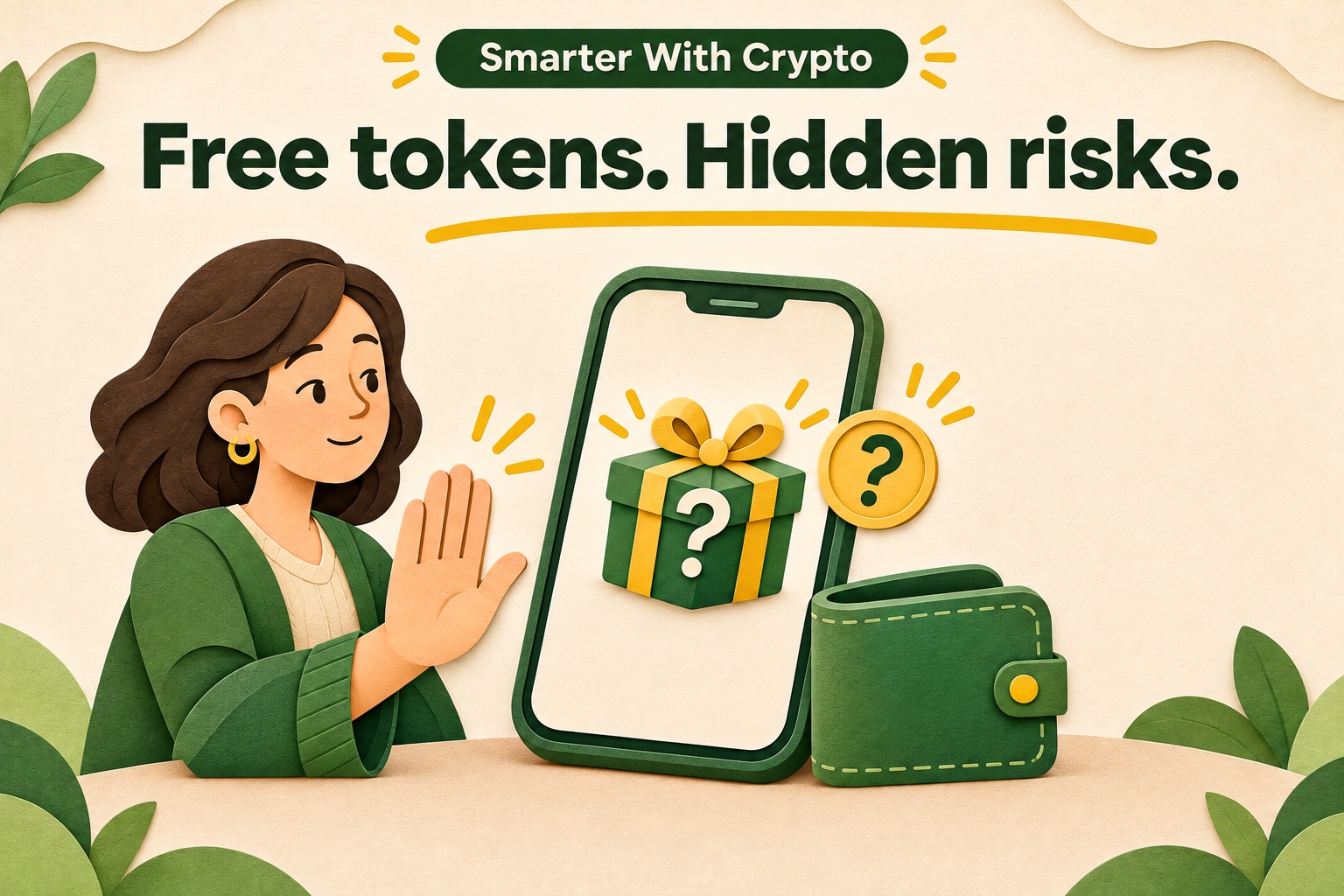
A public address can receive unwanted mail
On public networks, other people can send tokens to an address without its owner asking. An airdrop is a distribution of tokens. Legitimate campaigns exist, but so do unwanted tokens designed to attract attention. Appearing in your wallet is not a seal of approval.
Simply receiving such a token does not automatically give its sender your keys or permission to move your other crypto. An unexpected incoming token alone does not prove a break-in. An unexplained outgoing transaction involving real assets, however, deserves separate investigation.
A displayed value is not money in the bank
A wallet displays information about tokens. A price or total on the screen does not prove you can actually sell those tokens for that amount. There may be few buyers, or the token may be designed to prevent selling. A familiar name or copied logo does not change this.
The bait may appear in a token name, description or error message: visit this website to claim your reward. The next step might request a signature, spending permission or your recovery phrase. This is how someone tries to turn an unsolicited arrival into an action you take.
An example without signing anything
Fictional example: Noor discovers an unfamiliar bonus token in her wallet. Its description says she must activate it today. She never joined a campaign. She does not open the supplied link or try to sell the token as a test of whether it is real.
Through her trusted wallet app, she looks up how to hide or report unwanted tokens. That is a display function, not an instruction to send them. She has not paid or signed anything to tidy the view. This example is about her decision, not a real project.
Hiding is different from revoking
Hiding a token removes it from the view; it does not erase a blockchain record or cancel permissions granted earlier. Use the ordinary built-in feature if your wallet offers it. An unfamiliar website demanding a transaction to clean your wallet is not a necessary housekeeping step.
Already approved something or shared secret words? Hiding is then insufficient. Find your wallet’s official help independently and check exactly what you did. A harmful spending permission may need to be revoked separately. If keys or recovery words were exposed, revoking permission alone is not enough.
Practise the pause, not the claim
You do not have to investigate every unfamiliar token. You can choose not to engage with an unexpected reward. Do not follow its claim link, give away recovery words or try an unknown cleanup action. If you deliberately joined a genuine campaign, check its conditions through an independently found official source.
Practise three questions: did I expect this, what action is being requested, and what could that permission allow? The free quizzes at three levels help you recognise these decisions. You can learn without buying crypto, connecting a wallet or claiming a reward.
Original sources & further reading
- MyEtherWallet — unexpected tokens and transactions
- Phantom — common token scams
- ethereum.org — scam help and token approvals
- MetaMask — airdrop scams
Sources checked on .